- Tanamesa
- Posts
- Tilda, Carnival, and are we getting dumber?
Tilda, Carnival, and are we getting dumber?
the secret of success, is the secret.

Micael Balioni
February 19, 2026
THE MUSTS
World
Is this play about us?

Gen Z: The first generation with a lower IQ than the previous one
For decades, humanity followed the “Flynn Effect,” a basic rule where each generation was born smarter than the previous one.
But it seems that the tables have turned. For the first time in modern history, Generation Z (born between 1997 and 2010) is scoring lower on IQ tests than Millennials.
Where the problem began: The decline is not an isolated case, but a global trend in more than 80 countries that began around 2010, a period that coincides with the introduction of smartphones and tablets in classrooms.
The most significant change is in reading. To keep Gen Z focused, comprehension tests that previously used 750-word texts have been reduced to just 75 words.
To give you an idea, children who use computers for only five hours a day specifically for their studies had lower grades than those who rarely or never used technology in the classroom.
The most curious thing is that the generation that had the most access to information is becoming the least intelligent. In the end, the ease of the internet and AI may lead young people to a dangerous future.
What else in on
Bulgaria: Youth-driven protests force unpopular government to resign. Young organisers turned online networks into mass turnout, culminating in the government’s resignation in December 2025. “What this moment makes clear is that social media has not distracted Gen Z from civic life but, instead, placed political participation in the palm of their hands.” (Read)
UK: England and Wales just hit a near-50-year low for homicides. Police recorded 499 killings in the year to September 2025, the lowest number since 1977 and a 7% drop on 2024. (Read)
India: India has expanded rural tap water access from 16.7% of the population in 2019 to 81% in 2026, connecting 125 million rural households to clean, running water. In sheer numbers, this is the biggest, fastest, and most important sanitation drive in human history. (Read)
Economy & Business
insert something here
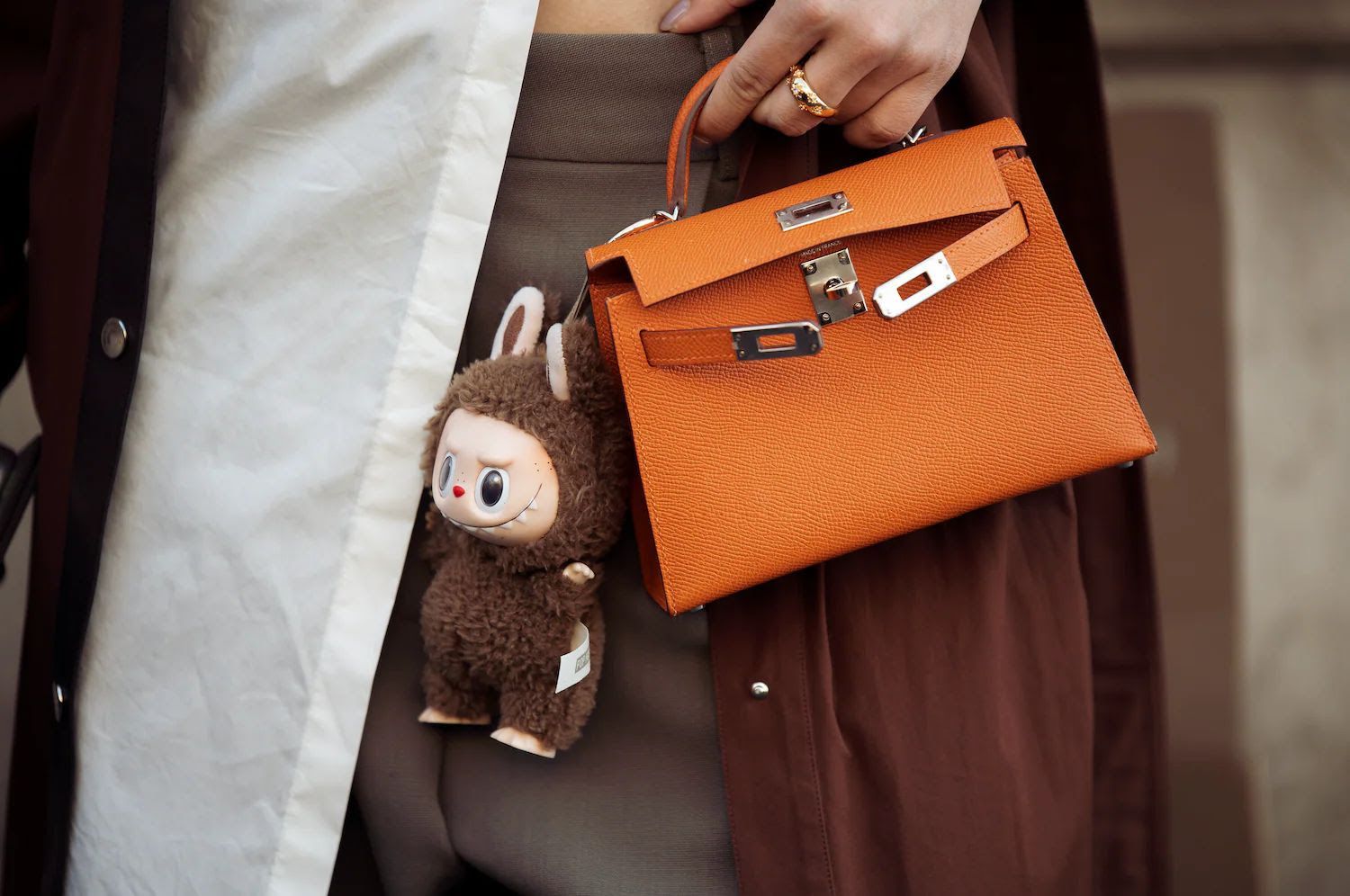
Treatconomics: The economics of dopamine
Imagine that your dream purchase has always been that three-bedroom apartment, in a good location and with a balcony. You open the real estate website, look at the price and... laugh nervously. It's not going to happen. Interest rates have risen, square footage prices have skyrocketed, and your dream seems further and further away.
How do you react?
( ) Despair.
( ) Take a finance course, reorganize your plan.
( ) Buy a luxury brand lipstick or perfume.
Choosing the third option in situations like these has given rise to treatconomics — which promises to be the big economic movement in the coming years.
But why would anyone buy that instead of an apartment?
The issue here goes beyond the item itself... It's about purchasing power. With the world facing economic uncertainty, a constant tariff war, threats of invasions and wars, consumers are deciding to take two steps back. Instead of making big purchases, investments, and plans, they find themselves in a situation that is quicker to resolve: pampering themselves with a “cheaper” item that will give them that quick dopamine rush and a sense of status.
Here, we can cite several examples:
Labubu.
Designer handbags;
Concerts and live music;
Lipstick or self-care items.
The funny thing is that this story begins precisely with lipstick.
The so-called lipstick effect is the theory that lipstick sales increase during economic recessions, and it has been around for almost a century. First documented during the Great Depression in the 1930s, the term returned to the spotlight in the 2000s. At the time, Leonard Lauder — former president of the traditional makeup brand Esteé Lauder — noticed an increase in sales after the September 11 terrorist attacks. The phenomenon continued until 2016. At the time, with Brexit, the US elections, and a climate of uncertainty about the next step for the global economy, people began to invest in fast consumption.
In 2026, the trend moved beyond lipstick and expanded
If 10 years ago the world was uncertain, in 2026, things basically tripled. Between news about the US presence in Venezuela, strategic moves in Greenland, and endless tensions in the Middle East or between Russia and Ukraine, economic destabilization shortened the planning horizon.
The Consumer Confidence Index for 25/26 — which indicates the level of consumer willingness to spend — already anticipates this feeling. It reflects a public that, faced with the impossibility of predicting the future, opts for immediate pleasure.
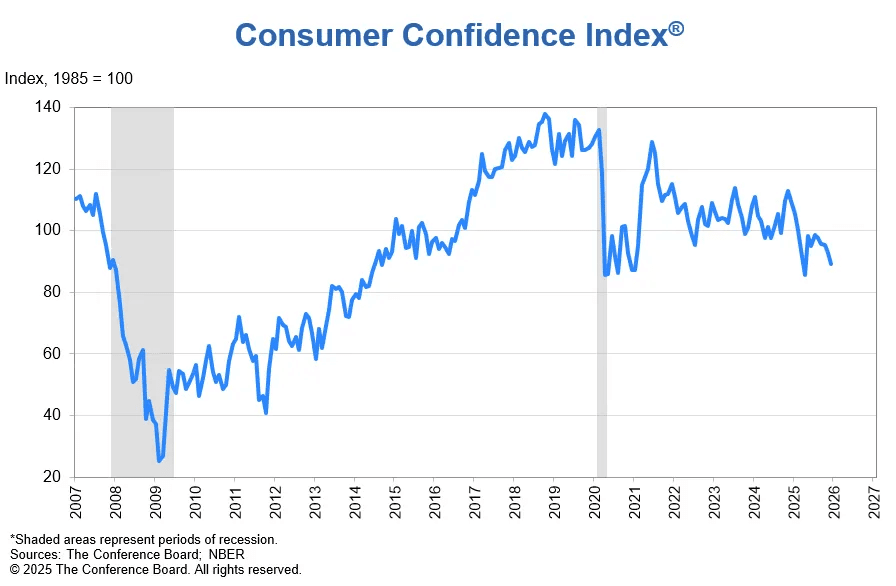
It is the evolution of the lipstick effect into something bigger: treateconomics. It is not just a change in habits, but a new global order where “treats” have become essential items for maintaining sanity.
According to data from Kantar, 36% of consumers already admit to being willing to take on small debts for these daily luxuries.
Brands, attentive to this consumer insecurity, have stopped selling products to sell “anesthetics.” Current marketing does not focus on the usefulness of the item, but on validating your fatigue. “You deserve it” seems to have become the motto of an economy that has discovered that profit lies in the need for emotional regulation.
What else is on:
AI in space: Elon Musk announced that xAI (~$230B) was sold to SpaceX (~$800B), effectively moving assets between two companies he founded. The deal ties AI development to space infrastructure, with Musk citing unlimited space and 24/7 solar energy as the main rationale. (Read)
Spotify: The company will start selling physical books in an unexpected move inside its app in the US and UK, partnering with Bookshop.org. This will expand the core business beyond audiobooks and deepens competition with Amazon, beyond Audible and Amazon Music. (Read)
Culture & Life
tell me if you agree afterwards
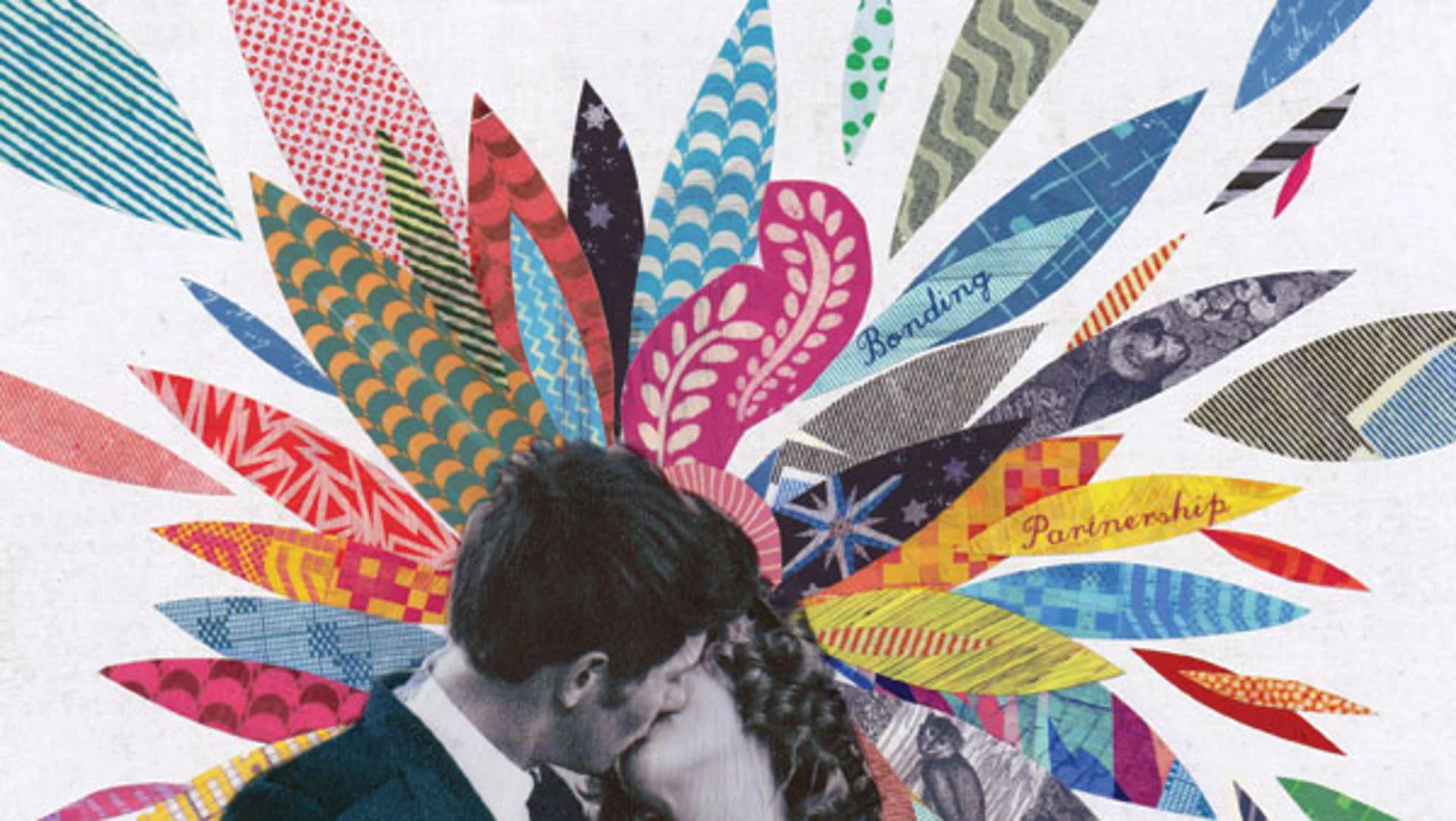
Are humans truly monogamous animals?
The wedding industry depends on fidelity, while the soap opera industry depends on the opposite, and now scientists are seeing where humans really fall in the monogamy rankings. A new study from the University of Cambridge found that while humans aren’t quite as true to our partners as Eurasian beavers, we are more likely to exhibit fidelity than meerkats. The study analyzed data from animals and self-reporting from humans to compare the percentages of full siblings versus half siblings, and ranked 35 species for their faithfulness:
Humans came in at No. 7, with 66% of siblings sharing both parents.
That puts us behind creatures like the California deermouse (100%), the African wild dog (85%), the Damaraland mole rat (79.5%), the moustached tamarin (77.6%), the Ethiopian wolf (76.5%), and the Eurasian beaver (72.9%), but ahead of the rest of the top ten: the white-handed gibbon (63.5%), the meerkat (59.9%), the grey wolf (46.2%), and the red fox (45.2%).
And we’re lapping our close relatives mountain gorillas (6%), as well as chimpanzees and dolphins (4%).
The evolutionary anthropologist who led the study, Mark Dyble, told the Washington Post that “the data suggest that we are” a monogamous species—and how surprising that is depends on your own assumptions.
Personal Opinion: It's true that there is a very relevant cultural factor here that I don't know if they took into account... But for all those who doubted, there you go. As monogamous as we can be.
What else is on:
Girls’ biological clock is speeding up: The age of puberty onset has dropped sharply. First menstruation shifted from ~17 in the 1840s to ~12 today, while breast development now often begins at 9–10 — with growing cases at age 8. Researchers point to three main factors — obesity, endocrine-disrupting chemicals in plastics and synthetic products, and chronic stress, which surged during the pandemic. (Read)
Men doubled their trips to the surgeon: Between 2018 and 2024, plastic surgeries among men jumped 95%, while non-invasive procedures like botox and fillers surged 116% — far faster than women’s ~60% growth. Even so, men account for just 16% of all procedures, signaling massive untapped growth for the industry. (Read)
EDITOR’S RECOMMENDATIONS
Movies
Some films enter your life through memory. Others through space.
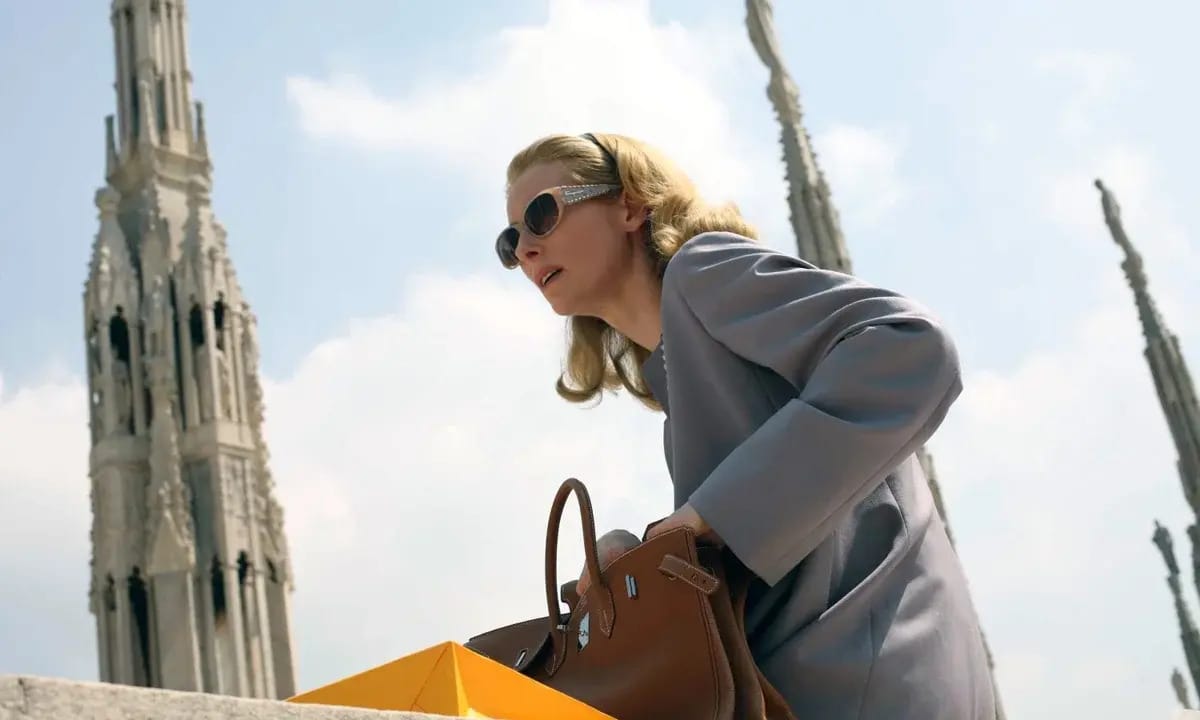
I Am Love by Luca Guadagnino: I didn’t come to this film through nostalgia, but through architecture. A friend was visiting Milan and wanted to see Villa Necchi — one of Milan’s most famous villas, and the house where the Recchi family lives in the film. I had been there before, but this time we took the guided tour (highly recommend).
The fact that it was directed by Luca Guadagnino—the same filmmaker behind Call Me By Your Name—and starred Tilda Swinton certainly helped convince me to give it a go. And I’m glad it did. This might be the most quietly devastating performance of her career.
Swinton plays Emma, a Russian-born woman who marries into one of Milan’s most powerful industrial families and, in the process, gives up more than just her last name. She gives up her language, her instincts, and—slowly—her sense of self. Emma performs her role flawlessly: devoted wife, attentive mother, elegant hostess. She understands, almost constitutionally, what is expected of her.
As a foreigner living in Milan, I couldn’t help but recognize some of Emma’s silences. The subtle dislocation. The way emotion gets reframed as “temperament,” especially when it comes from someone who isn’t fully from here. But I Am Love isn’t only about being foreign. It’s about what happens when traditions are preserved simply to preserve themselves—and the quiet violence required to keep them intact.
Guadagnino leans fully into the excess of this rarefied Milanese world. The camera lingers on meals you can almost taste, on fabrics, paintings, and gestures heavy with meaning. There are echoes of Visconti’s The Leopard and Scorsese’s The Age of Innocence—films about beauty as both refuge and trap. Yet beneath all that surface refinement, I Am Love is startlingly intimate. It’s about what it costs to wake up late. About desire as a force that doesn’t negotiate.
Swinton, speaking immaculate Italian and occasional Russian, is magnetic. Her transformation—from controlled elegance to something raw and exposed—is subtle, embodied, and deeply felt. By the final act, the film sheds politeness entirely.
I Am Love asks a difficult question and refuses to soften the answer:
What if becoming yourself means you can no longer belong?
This is cinema for people who enjoy beauty—but are willing to look past it. (Rating: 9/10)
WHAT ABOUT ME?
Micael
a little history today

Hi Tanamesars,
As many of you know, the past week I spent my first Carnival in Brazil ever (as an adult).
I landed back in Milan today at 9 a.m. and went straight to work — still carrying glitter in my suitcase and a slight existential confusion in my head. So today I wanted to leave you with just a taste of it.
Before it became a long weekend on the calendar, Carnival was almost a human necessity. Its roots go back to the Greek Anthesteria and the Roman Saturnalia, festivals of inversion where the order of the world was temporarily suspended. For a few days, hierarchies dissolved. The servant could sit at the master’s table. The king could become a fool.
It was a pressure valve — a way for society to survive itself.
With the rise of Christianity, those pagan celebrations were reframed. Carnival became the last indulgence before restraint. Even the word comes from the Latin carnis levare — “to remove the meat” — referring to the fasting of Lent. Feast before sacrifice. Excess before discipline.
When Carnival arrived in Brazil through the Portuguese Entrudo, it was chaotic and violent. But it was in Brazil — in the encounter with Afro-Brazilian rhythms, in the terreiros, in the organization of Black communities pushed to the margins — that Carnival found its soul.
Samba (the Brazilian music genre) was born as occupation. As presence. As resistance. And that presence came at a price. Until the early 20th century, samba was literally criminalized. Police would arrest musicians for “vagrancy.” For Black bodies to occupy the asphalt without repression, a negotiation had to happen.
In 1934, under Getúlio Vargas, the Carnival parades were officially recognized — but with conditions. Samba schools would receive funding only if they presented “educational” themes. They had to exalt Brazilian history, national heroes, the riches of the fatherland. Celebration became curriculum.
And what started as a bureaucratic toll — a cultural tax for visibility — slowly transformed into something else. Samba schools learned to speak the language of power. And then, they learned how to bend it. The parade avenue became more than spectacle. It became narrative. It became memory. It became, sometimes, a ballot box disguised as sequins.
Watching it live this year felt different. It truly feels like millions of people saying: we are still here, and we will tell our own story.
I came back exhausted, sunburned, and so so so happy. I’ll probably come back soon with more details about what it felt like to be there — the blocos, the chaos, the beauty, the contradictions. But for now, I just want to sleep for 12 hours straight.
With love,
Micael

Subscribe to Tanamesa for your regular fix of content, entertainment, and my life. Our mission is bring everything you need to know about the most important things happening worldwide, with exclusive recommendations curated by the editor-in-chief.
Take it easy: It lands in your inbox only every second Thursday. And just like me, it is not only free but also kind of addictive.