- Tanamesa
- Posts
- Finally, let's talk about Brazil
Finally, let's talk about Brazil
You may not have much, but what you've got, you've got a lot of.

Micael Balioni
November 27, 2025
THE MUSTS
World
and they said we were promiscuous…

The real recession is not in your pocket
Forget inflation, interest rates, or trade wars for a minute. What concerns researchers now is another type of crisis: the sexual recession.
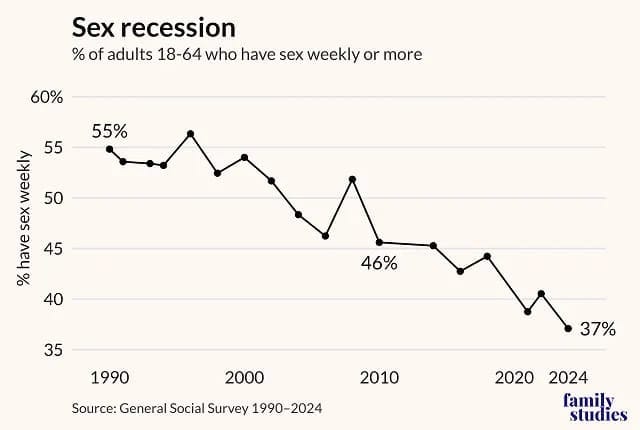
Between screens, isolation, and fewer stable relationships, people are having less sex. In 1990, 55% of adults aged 18 to 64 said they had sex weekly. In 2024, only 37% did.
The impact is even stronger among young people: The proportion of people aged 18 to 29 who have not had sex in a year has doubled from 12% to 24% since 2010. Sounds familiar?
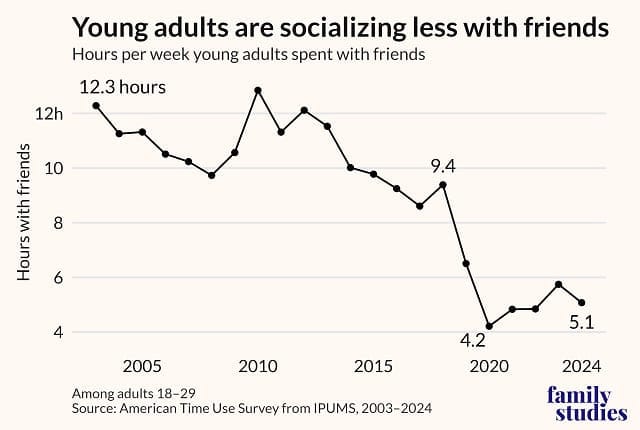
Between 2010 and 2019, the average time spent with friends plummeted from 12.8 to 6.5 hours per week, reaching just 5.1 hours last year.
The excess of screens, games, social media, and streaming contributes to fewer face-to-face interactions, reducing opportunities for relationships and, consequently, marriages—a key factor in the decline, as married adults report almost 50% more sex than singles.
Although still above average, married people are not immune to the trend. Between 1996 and 2008, 59% said they had sex weekly; from 2010 to 2024, that number dropped to 49%.
In the end, the sexual recession exposes a modern paradox: We have never been so digitally connected and, at the same time, so distant in real relationships. So, what about stop reading here and start having some fun? (use condoms!)
What else in on
Japan: Elderly women are doing everything they can to get arrested in Japan. With loneliness and the high cost of living, prison has become a refuge with regular meals, medical care, and even companionship. Many say they would even pay “rent” to live in jail. (Read)
Russia: Promoting quality of life, public services, and high-end real estate, Russian agencies are encouraging families to immigrate to Brazil. Brazilian Constitution states that every child born in Brazil has the right to citizenship, and after one year, parents can obtain the same document. (Read)
EU: The Court of Justice of the European Union ruled today that all countries in the bloc must recognize same-sex marriages performed in other member states, even if their own laws do not allow such unions. (Read)
Germany: will introduce compulsory military service for young people turning 18. The idea is to create the strongest army in Europe. (Read)
India: The Indian government now offers menstrual leave to all working women for one day per month. (Read)
Bangladesh: The former prime minister of Bangladesh was sentenced to death by the country's international court. Imagine if this trend catches on? (Read)
To watch: NASA astronaut records northern lights from space.
Economy & Business
you know I love talking about them
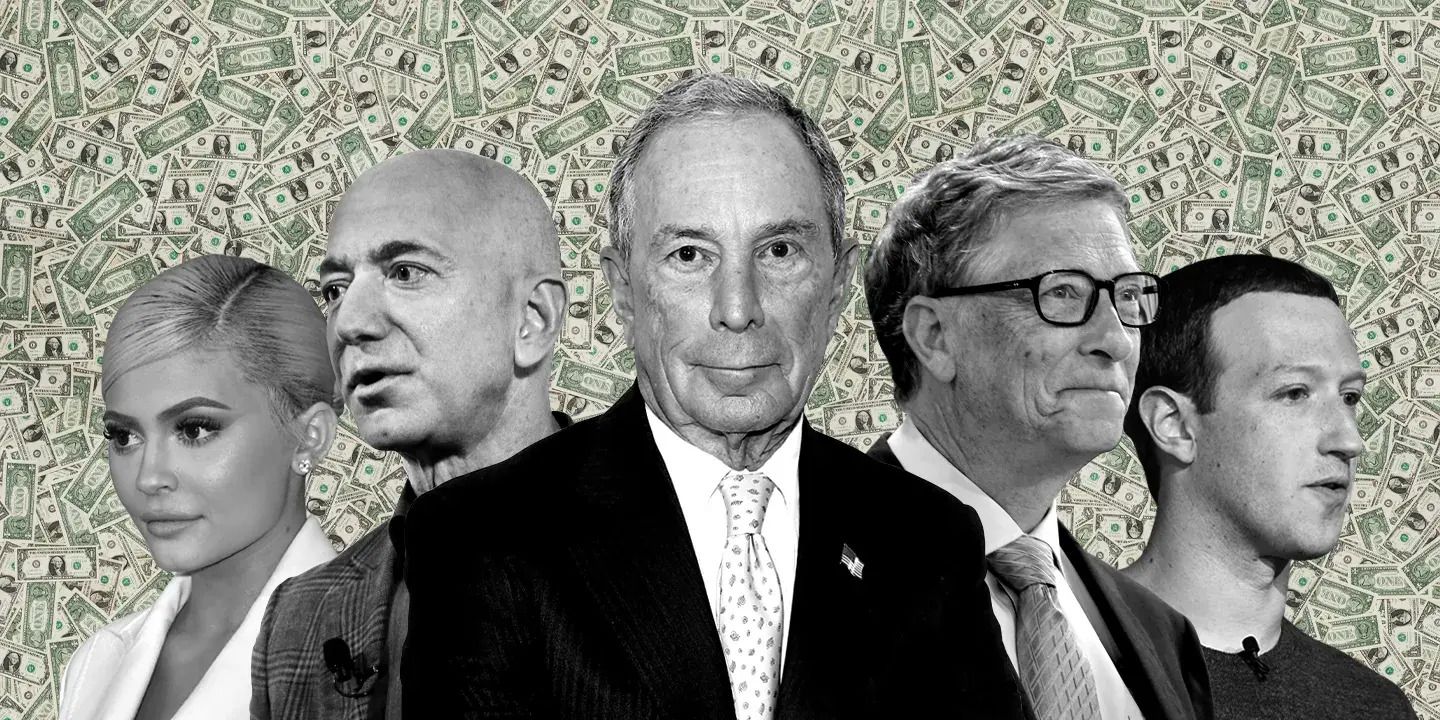
Not quite a billion facts about billionaires
Just the US has 902 billionaires this year, up from 66 in 1990, when the economy was less than half of its current size and $410 million was equivalent to $1 billion in today’s dollars.
US billionaires are collectively worth about $7.6 trillion, according to Forbes data analyzed by Americans for Tax Fairness. That accounts for ~4.5% of all wealth held by Americans, while making up just .0003% of the population.
Who (and where) are they?
The US leads the pack, home to almost one-third of the world’s 3,028 people with a $1+ billion net worth, followed by China (450), India (205), Germany (171), and Russia (140). Forbes also found that the leading billionaire hubs are New York City (home to 123 billionaires), Moscow, Hong Kong, London, and Beijing.
Not surprinsingly: It’s a boys club, with women accounting for just 13% of the world’s billionaires, according to the Altrata Billionaire Census—though that number is growing.
Tracing the benjamins
Some routes are more likely than others to land you in the exclusive club that includes Bill Gates, Ronaldo, Selena Gomez, French fashion executives, and Russian oil tycoons:
The most common way to achieve billionairehood is to be born into a wealthy family or by marrying into wealth (what a shock!), with a third of billionaires having inherited much of their net worth.
The likeliest professional path to billionaire status is to follow in Warren Buffett’s footsteps, as 15% of billionaires derive their net worth from the finance and investment industry.
Tech minted 13% of billionaires, followed by manufacturing (11%), fashion and retail (10%), healthcare (7%), food and beverage (7%), real estate (7%), diversified industries (7%), media and entertainment (4%), and energy (4%).
Most can’t fully cash out: Billionaires typically aren’t able to build a castle out of hundred-dollar-bill stacks, since 66% of their net worth is tied up in stocks (often in a company they started), which they can’t sell easily, according to Altrata.
What else is on?
Meta: According to documents, the owner of Facebook, Instagram, and WhatsApp earned US$16 billion in 2024 from ads for scams and illegal products. The amount is equivalent to about 10% of the company's annual revenue. (Read)
Eli Lilly: Medicine has a new favorite headline, and it begins with a weight loss needle. Eli Lilly touched $1T in market capitalization, becoming the 10th company, and the first drugmaker, to reach that milestone. (Read)
Project Prometheus: Four years after stepping down as CEO of Amazon, Jeff Bezos took on the role of co-CEO of Project Prometheus, an artificial intelligence company. (Read)
OpenAI: Sam Altman said he will allow sexual content on ChatGPT for users who prove they are of legal age. (Read)
Skims: Kim Kardashian's clothing company, raised $225 million in an investment round, bringing its market value to $5 billion. (Read)
Plus: The Daily Mail is close to finalizing a $650 million deal to buy The Telegraph, bringing two of the UK's most influential newspapers under the same umbrella. The deal creates one of the largest privately owned British media conglomerates. (Read)
Culture & Life
are you still using Polyester?
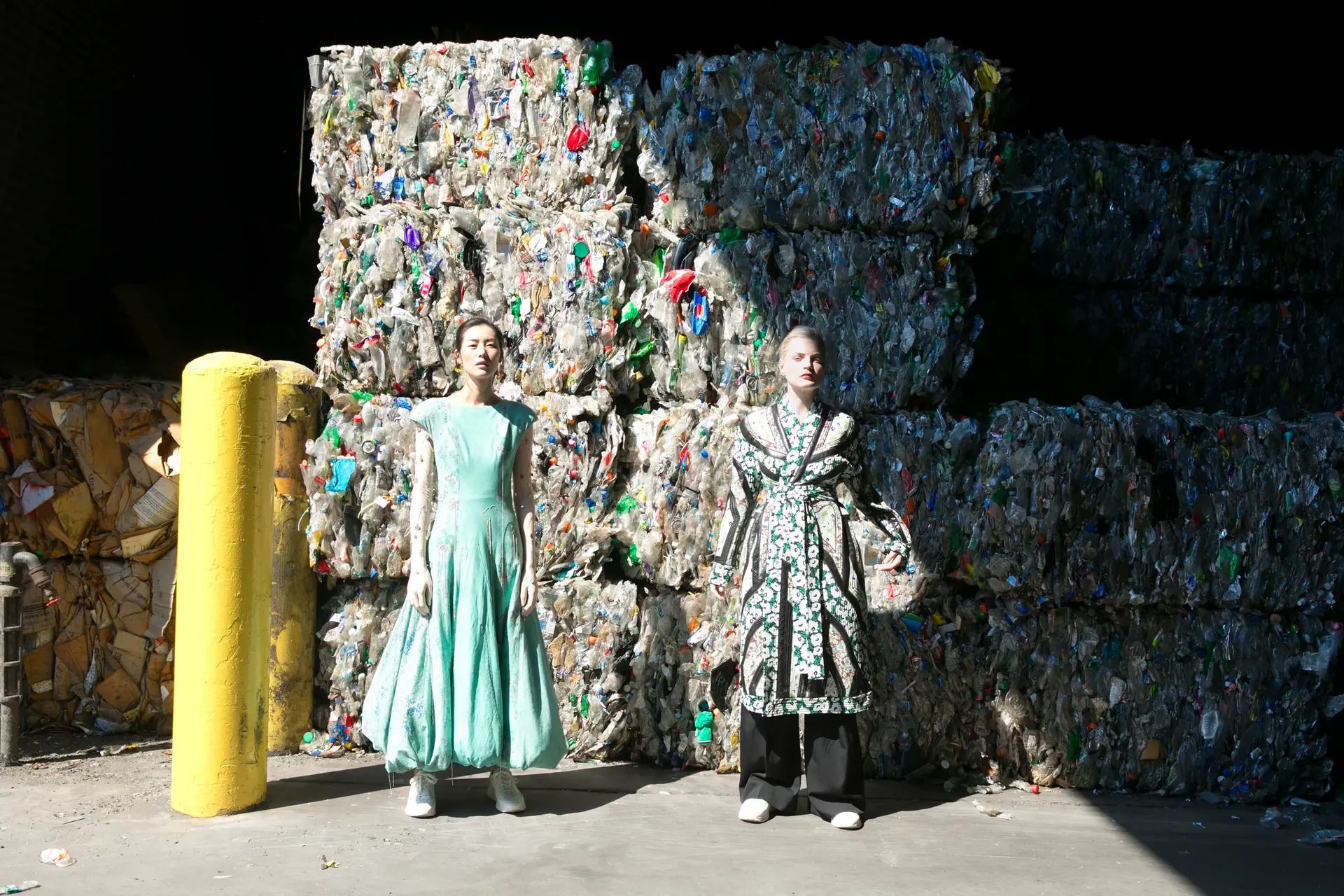
Recycling is the new trend in the fashion industry
It's not just the look that changes every season. Now, instead of discarding tons of fabric, the fashion industry is trying to reduce waste by recycling.
New laws are forcing brands to review their processes. The rule is: clothes can no longer end up in the trash on an industrial scale, and companies need to show where the used material goes.
The challenge is that most garments mix fibers, such as cotton and polyester. To recycle, they must be separated:
Cotton can become a new fiber;
Polyester, on the other hand, needs to be broken down and remade from scratch.
Why does this matter? The numbers seem to answer that question well. In 2024, the world produced 132 million tons of textile fibers, but only 1% came from recycled fabrics.
The solution comes from technology: Some companies use pressure and heat to “disassemble” fabrics, while others use chemicals to dissolve polyester and preserve cotton. AI is used to identify the composition of each piece and send it to the right process.
What else is on:
Give me a Klint: The painting by artist Gustav Klimt — “Elisabeth Lederer” — sold for US$236.4 million, becoming the most expensive work of art ever auctioned in the world. (Read)
Tacos y Tequila para todos: Miss Mexico won the Miss Universe pageant, following a scandal-filled run that included contestants walking out after a Thai pageant official berated her. (Read)
Millennial saint: Carlo Acutis was canonized by Pope Leo XIV in St. Peter's Square, becoming the first saint of the millennial generation. Called “God's influencer”, he used the internet to spread the faith and became a symbol for connected young Catholics. (Read)
EDITOR’S RECOMMENDATIONS
Music
soy el laberinto del que no puedes salir
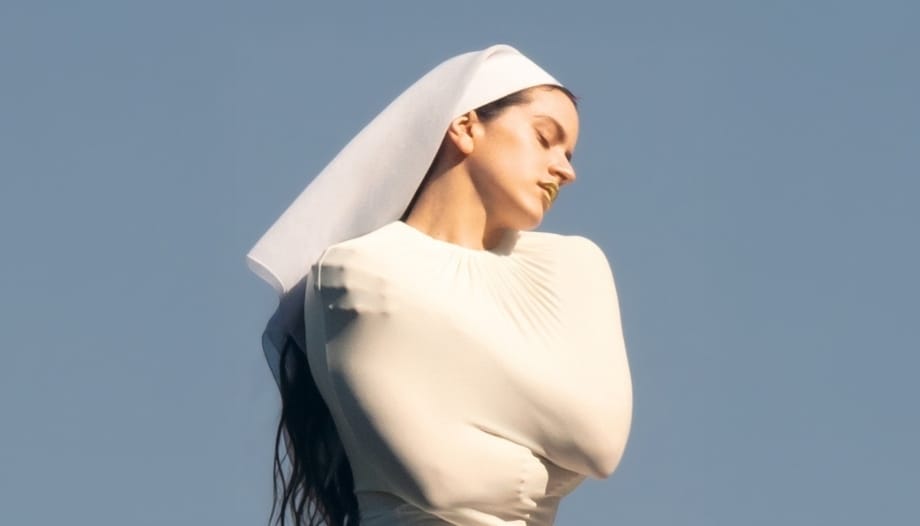
Lux from Rosalia: A lot of you were asking me: What about LUX? And yes baby, here we are.
Truth be told, I’ve wanted to be a Rosalía fan for years, but it never fully clicked—until I saw her live two years ago (or one year ago… time is a social construct). Her concert was not only incredible; her voice was probably the best I’ve ever heard live. She sang “Hero” by Enrique Iglesias and that performance has lived rent-free in my mind ever since.
Another important confession: her EP with Rauw Alejandro is, to me, one of the best EPs ever made. Every single song is in my most-played list of 2024. So yes, I was emotionally invested when they broke up.
Now, let’s talk about Lux. What immediately impressed me is how brave it is for an artist like Rosalía to release an album that’s not as pop-forward as MOTOMAMI—leaning instead into classical influences, choral arrangements, and a deeply spiritual narrative. Most artists avoid talking openly about faith; she, on the other hand, built an entire album around saints, sacrifice, devotion, mysticism, and the search for purpose. This is definitely not an easy, quick-dopamine pop record like Zara Larsson or Demi Lovato’s latest releases (both of which I’ve recommended here).
Lux feels like a heartfelt act of avant-garde classical pop. Structured in four movements and sung in 13 languages, the album storms in like an orchestral thunder and leaves behind a guide for pop’s seekers — people who believe that answers to love, desire, and purpose can still exist inside a three-minute song. It’s not the adrenaline machine that MOTOMAMI was, but it rewards listeners who crave more from pop: more emotion, more intention, more risk.
To build Lux, Rosalía read hagiographies of female saints and poets like Teresa de Jesus, Sun Bu’er, and Hildegard von Bingen. She studied feminist theory while preparing her acting debut in Euphoria. She gathered all of that devotion, discipline, and thought, and synthesized it into the worldview of a 33-year-old woman trying to make sense of the chaos around her. We love when artists talk about their personal experiences — but isn’t it refreshing when we also see the study, the craft, the work behind the art?
And just like the performance of “Hero” that hit me years ago, at the center of Lux is her voice. Hypnotic, precise, heartbreaking, celestial. That’s what captivated me the most.
As Pitchfork said, Rosalía is redrawing pop’s map at a stunning pace. And honestly? I cannot wait to see where she goes next. (Rating 9/10)
Best songs: Dios Es Un Stalker; Reliquia; La Yugular; Divinize
WHAT ABOUT ME?
Micael
Ohana means family. Family means nobody gets left behind or forgotten
Hi dear,
How are you?
I’m finally back in Italy, and now that the dust has settled a little, I can sit with myself and talk about my trip to Brazil. While I was there, I had a few texts pre-written because—honestly—I didn’t have the time. It was a trip made of trips, tiny journeys within a bigger one. Maybe this will become a series. Let’s see. Today, I want to start at the beginning.
The first part of my trip was visiting my family on my mother’s side. They live in a small rural town in Rondônia, a state in the northern part of Brazil, close to the Amazon. Which basically means: add two extra days just to get there, and two more to come back. The last time I’d seen most of them was seven years ago, right before I came to Italy for the first time. So this year—knowing I would stay in Brazil longer than usual—visiting them felt necessary.
My relationship with this side of the family has always been… interesting. We never lived near each other, and I can count on one hand the times we’ve met. And yet, just like when I wrote about my grandmother in the 26th edition, I’ve always felt their love for me so deeply. As a kid, I couldn’t understand it.
How could an uncle say he loved me if we barely had memories together? No inside jokes, no shared history, nothing that explained that affection. How could my aunt speak so beautifully about her love for me when our lives barely touched?
I used to believe that love needed presence—that you needed years of coexistence for it to grow. Otherwise, it was just words.
But they have always proved me wrong.
Every time I went there, I felt loved. Every time I saw them, I saw love. To the point where now, as an adult who thinks too much about these things, I question all my theories on how love is built—but I no longer question their love for me. Or mine for them.
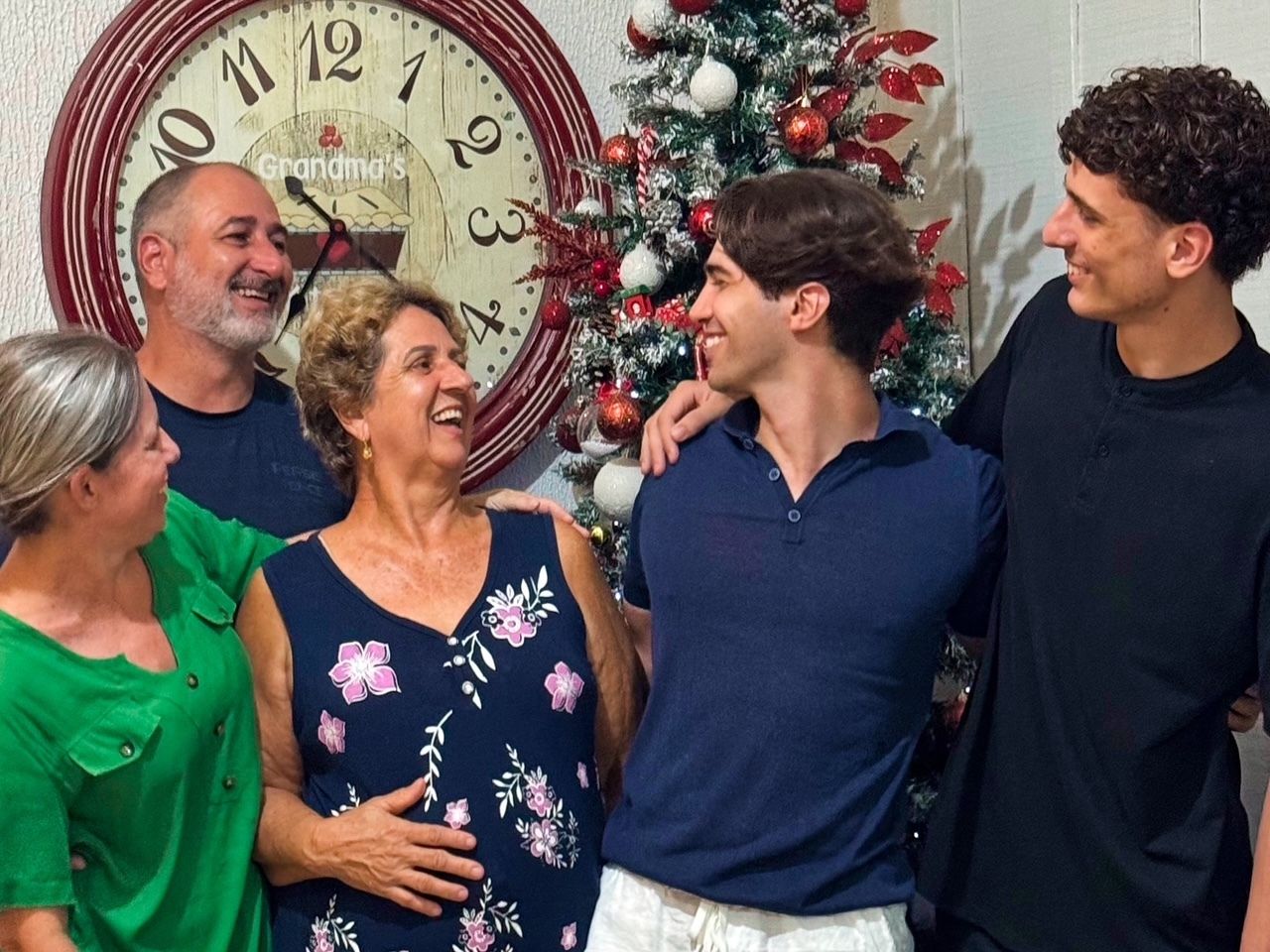
Before I arrived, my aunt decorated the entire house for Christmas (in late October!) as a way to celebrate that I was coming. I was equally excited and brought (amazing) gifts from my trip to Sicily. My mom planned activities for us as a family, and moments for just the two of us. She cooked the recipes she knows I love. My grandmother did the most grandmother thing possible and secretly gave me money behind my mom’s back. My cousin—now seventeen—took me to the gym, and we bonded through something so simple I’ve never done with a cousin before: working out together.
My days there were simple. Time moved in these soft rhythms: waking up at 7, lunch at 11, reading, resting, afternoon coffee with cake, gym, and maybe some late-night games when everyone reunited after dinner. When I was little, I hated that quiet life. Now, I think I crave it.
This first part of the trip reminded me why I love Rondônia, and what family can mean when you look at it without expectations, without rules, without the need for constant presence. As Lilo & Stitch says, “Family means nobody gets left behind or forgotten.” And even though I was never close by, I was never forgotten. and I will always remember that.
With love,
Micael.

Subscribe to Tanamesa for your regular fix of content, entertainment, and my life. Our mission is bring everything you need to know about the most important things happening worldwide, with exclusive recommendations curated by the editor-in-chief.
Take it easy: It lands in your inbox only every second Thursday. And just like me, it is not only free but also kind of addictive.
Social ties are the big “x” factor