- Tanamesa
- Posts
- BBB: Bugonia, Brazil and Bottoms up
BBB: Bugonia, Brazil and Bottoms up
it takes different people to unlock parts of you, you didn't even know

Micael Balioni
March 05, 2026
Before anyone says anything — yes, I'm aware. We all are.
There's a war happening. And like I did when the conflict in Palestine broke out, I'm choosing to take the same approach here: I won't pretend it isn't there, but I also won't let it swallow everything else.
Everybody loses in war. That's not a political statement — it's just true. And I don't want to diminish what's happening, not even slightly. But mass media will cover what mass media covers. This newsletter has always tried to look at the things that don't make the front page — the quieter stories, the cultural shifts, the human texture underneath the noise.
That's what we're here for. So let's do that.
THE MUSTS
World
the Portuguese Dream
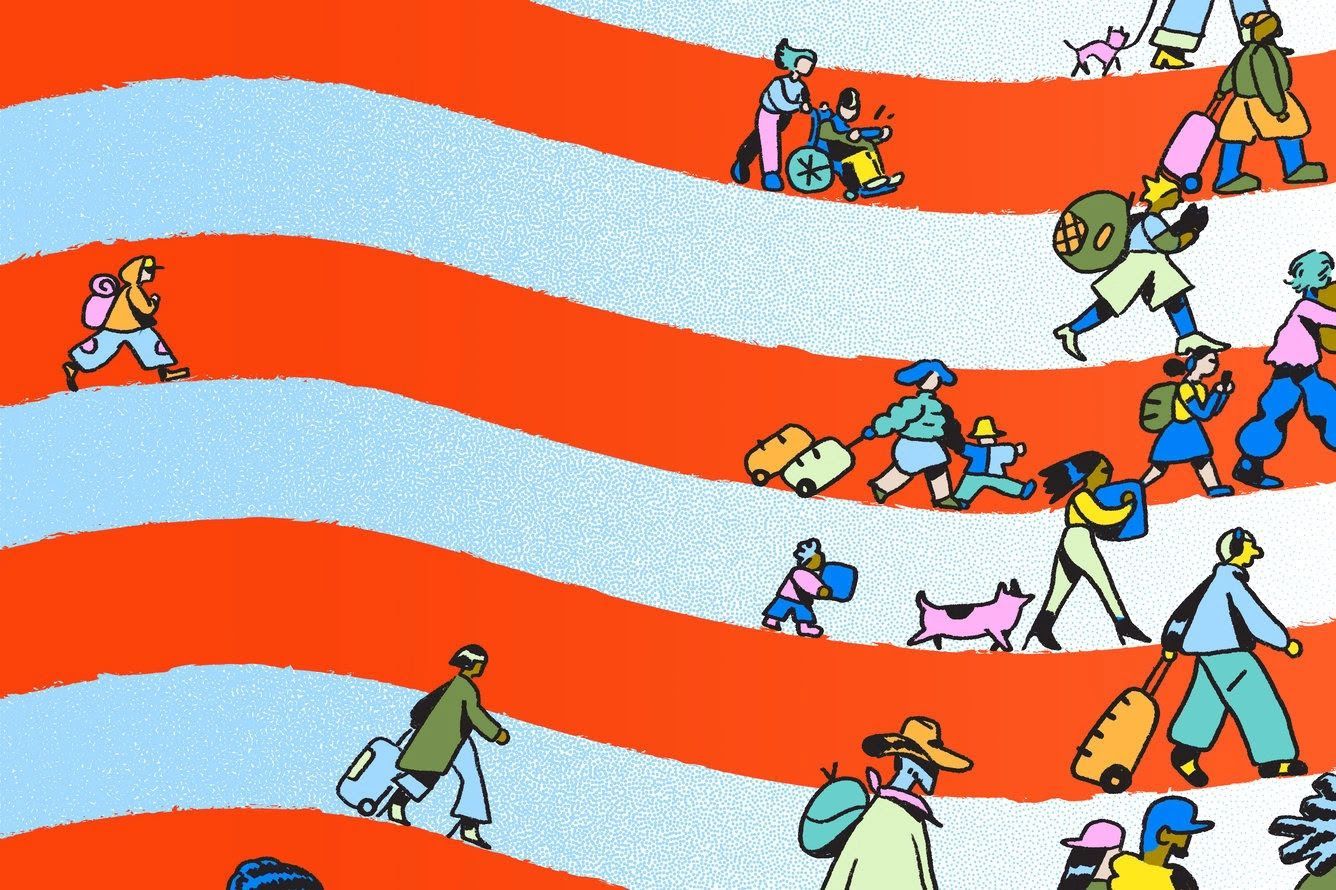
Does the American dream now reside in... Europe?
Bye bye, Uncle Sam. The US, a country constantly linked to strong immigration from abroad, has been experiencing a curious and somewhat rare movement in its nearly 250 years: mass emigration.
In 2025, at least 180,000 Americans moved abroad—a record number. In total, it is estimated that up to 9 million Americans now live as expatriates. Their destinations are varied:
Portugal: The American community jumped from 4,700 in 2020 to 26,000 in 2025.
Ireland and the United Kingdom: Applications for British citizenship hit a record high, up 42% from the previous year.
Mexico: It has become a refuge for seniors seeking low-cost nursing homes.
Why leave? The reasons vary from the high cost of living in the US to the search for European social safety nets, as well as a polarized political climate that particularly alienates women.
To get an idea of the scale of the movement, this is the first time since 1935 (the Great Recession) that more people have left the US than entered it.
Net migration was also negative by 150,000 people, largely due to 675,000 deportations and 2.2 million “self-deportations.”
Looking ahead, this scenario is likely to worsen. Today, 20% of American adults want to move abroad permanently — twice as many as 15 years ago.
What else in on
Brazil: Deforestation in the Brazilian Amazon on track to fall to its lowest level ever recorded. Brazil detected 1,325 km² of deforestation between August 2025 and January 2026, down from 2,050 km² a year earlier. Annual loss fell 11% to 5,796 km², an 11-year low. Environment Minister Marina Silva says that if current policies hold, the country could reach a historic milestone. “There is an expectation that we will reach, in 2026, the lowest deforestation rate in the historical series in the Amazon if we continue with these efforts.” (Read)
India: Ayushman Bharat has delivered free hospital care to over 110 million people, adding 25 million beneficiaries in the past year alone. As a result, average out-of-pocket spending in India has declined from 64% of total health expenditure in 2014 to 39% in 2022. (Read)
Venezuela: Over 1,500 Venezuelan political prisoners request release after new amnesty law. (Read)
plus: I found this and I haven't stopped thinking about it since. Put in your birthday — and watch the world unfold from the moment you arrived in it.
Economy & Business
Could I get that margarita on the rock-rock-rocks?

The Spirits Boom Was Aged to Perfection — Then the Market Stopped Drinking
The liquor giants are drowning in their own supply. Five major alcohol producers are sitting on $22B of aging spirits in warehouses — the biggest stockpile in over a decade. Clearing it is already forcing distillery shutdowns and steep price cuts. And the hangover may be the least of their troubles.
From cheers to tears: Today’s glut is larger than even the 2008-era stockpile, with Bernstein analyst Trevor Stirling calling it “unprecedented” as excess inventory spreads across every major spirits category. The problem traces back to the pandemic, when producers ramped up output as at-home drinking surged, assuming demand would stay elevated.
Aged in Barrels, Stuck in Limbo
The slowdown is showing up across the entire spirits aisle. Cognac is taking the hardest hit from the glut, with exports plunging 72% year-over-year in February, according to the Bureau National Interprofessionnel du Cognac. The pressure only intensified after China imposed a 34.9% duty on European cognac amid trade tensions, offering exemptions only to producers that agreed to minimum pricing.
Rémy Cointreau’s November update captured the shift, with organic cognac revenue down 7.6% and CEO Franck Marilly admitting, “We’re in a different world.”
Even LVMH’s Hennessy, which sold for up to $45 a bottle in the US during the pandemic, is now being marked down to $35.
Bottom line: In a market where you have to predict future demand, it is always better to be cautious.
What else is on:
Netflix, Paramount, and Warner: the show of the season: After months of back-and-forth, Warner Bros. Discovery chose Paramount Skydance as its buyer, with a $111B offer beating Netflix's $83B bid at $31 vs. $27.75 per share. Netflix walked away without raising its bid — but pocketed a $2.8B breakup fee, roughly 25% of its entire net profit from last year. If regulators approve, the combined giant will control HBO, CNN, TNT, Nickelodeon, Star Trek, Harry Potter, two streaming platforms, and two Hollywood studios. (Read)
Amazon: Amazon surpassed Walmart in annual revenue and became the world's largest company by revenue, with a market value of $2.2 trillion. (Read)
Trend alert: By 2026, 1 in 3 pet owners will spend more on their pets' health than on their own. (Read)
Palatir: Palantir moves its headquarters to Miami and joins the growing exodus of tech companies to Florida. (Read)
Technology & Science
i want to hear your opinion afterwards
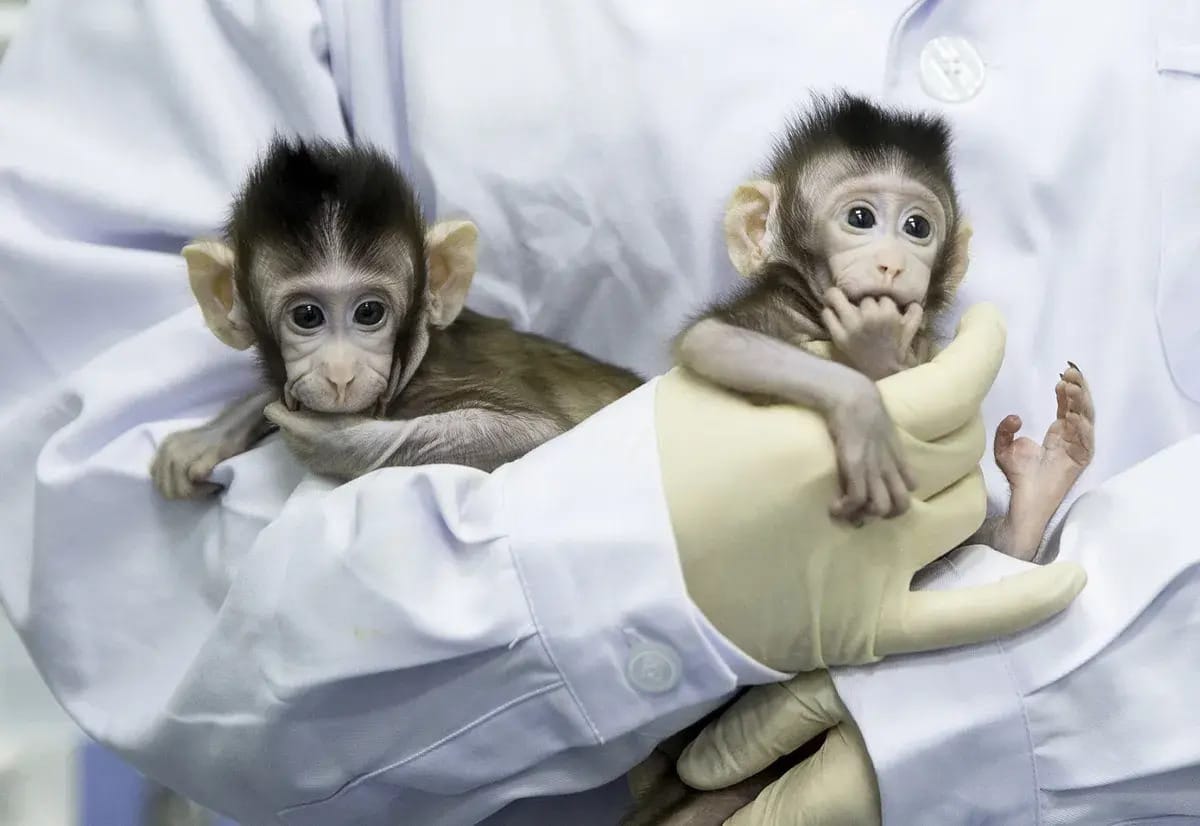
How far should we go to cure human diseases?
The ethical debate over the use of animals to test the progression of common human diseases has become increasingly important among scientists around the world.
The reason for this is largely due to China. The country is creating genetically modified pigs, dogs, and monkeys to develop human diseases as part of a strategy to lead global biotechnology.
In practice, scientists alter specific genes so that these animals develop real neurological and degenerative diseases—such as ALS, Parkinson's, autism, and schizophrenia—something that mice often cannot reproduce. This allows them to observe the progression of the disease, test therapies, and evaluate side effects more accurately.
The move has a purpose. Global biotechnology leadership has become a priority for Xi Jinping, with investments of US$ 3 billion in 2022 and fewer ethical requirements for animal testing.
One of the clearest examples came from a pig genetically modified to develop ALS, a disease that does not manifest reliably in mice.
Based on this model, researchers created a gene therapy that advanced to the point of receiving authorization from the FDA. The result is an industry that has doubled in value over the last decade, from US$7 billion (2014) to US$15 billion (2024).
What else is on:
Who needs a therapist: The governor of Illinois has signed a bill into law that bans AI as therapists across the state. (Read)
The UK wants to predict murderers with AI: The British government is developing a system that uses personal data and algorithms to identify who is most likely to commit a murder before it happens. The system analyzes records of people who've crossed paths with police or the justice system — pulling data on ethnicity, mental health, self-harm, domestic abuse, and even first police contact as a victim. Critics argue the system doesn't detect criminal tendencies, but social inequalities, effectively turning vulnerable people and victims into suspects. (Read)
EDITOR’S RECOMMENDATIONS
Movies
What if the conspiracy isn’t the point, but the loneliness behind it is?

Bugonia by Yorgos Lanthimos: This is Yorgos in a slightly different register. Still strange. Still controlled. Still operating in that morally ambiguous space he loves. But this time, surprisingly… digestible (at least for me).
The film is a remake of Save the Green Planet!, Jang Joon-hwan’s cult Korean thriller from 2003, now considered one of the most significant Korean films of this century.
The premise is classic Lanthimos absurdity: Teddy (Jesse Plemons), a part-time beekeeper and warehouse worker, becomes convinced that his company’s CEO, Michelle Fuller (Emma Stone), is an alien from the Andromeda galaxy plotting Earth’s destruction. He kidnaps her, shaves her head, ties her up in his basement — and calmly demands answers.
But the film quickly shifts from conspiracy thriller to psychological chess match.
Michelle’s response to captivity is almost unnervingly serene. She doesn’t scream. She doesn’t panic. She speaks with composure — maybe too much composure. And very quickly, the dynamic becomes unclear: Who is manipulating whom? Who is delusional? Who is performing?
The question of whether she’s actually an alien almost becomes secondary. Lanthimos has always filmed his characters as if they were slightly extraterrestrial anyway — emotionally detached, operating by unfamiliar rules. Here, that distance becomes thematic. Everyone feels slightly off-world, slightly misaligned. The film keeps folding in on itself, asking:
Is paranoia born from madness — or from living in a system that genuinely feels unreal?
Critically, there’s a quiet consensus that this is not Lanthimos at his most explosive — more refined than revolutionary. Some see it as a clever product rather than a singular vision. I can understand that. For me, it wasn’t as mind-blowing as Poor Things — which felt like a full cinematic fever dream. Bugonia doesn’t reinvent his language. But it does sustain it. It keeps you leaning forward, constantly recalibrating your interpretation.
If some Lanthimos films feel like endurance tests, Bugonia feels like a puzzle box. Not as revolutionary — but still sharp, still unsettling, still very worth opening. Definitely still operating at a high level. (Rating: 8.5/10)
WHAT ABOUT ME?
Micael
e cada cachorro que lamba a sua caceta

Hi Tanamesars,
The time has come to talk about one of the most special trips I've ever taken. And I want to do it properly, so brace yourselves.
A few weeks ago, I received one of the most meaningful gifts I've ever gotten. It wasn't wrapped, and it didn't have a bow. It was a plane ticket to Rio de Janeiro — and the words: we want you there.
Let me explain:
Last November, I spent a month in Brazil between jobs — one of those rare, slightly chaotic windows of time where life pauses long enough for you to actually breathe. And while I was there, my friends told me they were planning their fourth Carnival in Rio, and they wanted to do this one right. They wanted me there with them.
I said no. I had just started a new job. I had just spent a month and a lot of money. Going back two months later, just for a week, just for Carnival — it felt irresponsible. Beautiful, but irresponsible.
They came back to me anyway. They said: if you can get the days off, we'll take care of the ticket and help with the accommodation. Just come.
So I went.
Here's something I've been noticing for a while now: the longer I live outside of Brazil, the more Brazilian I become. Which sounds like a paradox, but anyone who has ever left their country will probably understand exactly what I mean.
When I lived in Brazil, I wasn't particularly connected to Brazilian music, Brazilian cinema, or Brazilian food in any conscious way. It was just... there. Like water to a fish. But once you live abroad, something shifts.
I became the Brazilian one in the group. I started speaking more about my roots, feeling homesick, missing flavours I never thought twice about. Listening to Brazilian music I didn't even used to like. Feeling proud of things I used to take for granted. Brazil became something I had to choose — and choosing it made me love it differently.
Carnival was the culmination of all of that.
If you've never been, let me try to explain: Carnival in Brazil is not a party. It's a marathon. Blocos that start at seven in the morning and carry you to two in the afternoon. Decisions to make — beach? rest? another party? — before the night starts all over again. Every single day for a week. You don't stop. You don't sleep enough. You don't want to.
Our group had been preparing for months. We planned our costumes for every day, customized our camarote outfits, and arrived in Rio with the kind of collective excitement of a slightly unhinged family. And the magic wasn't only in the week itself — it was in the preparation, in the WhatsApp threads, in the photo-sharing aftermath where we relived everything we'd just lived.
It was in the fact that I was only there because people who love me looked at the barriers and decided to remove them.
That's what I keep coming back to when I think about it. Not the samba, not the costumes, not even the Sambódromo at night — which, by the way, is one of the most breathtaking things I've ever seen. What stays with me is the feeling of being chosen. Of someone saying:
this moment would not be complete without you.
Brazil is trending now, and I love that the world is finally catching up. But what I found in Rio wasn't a trend. It was something I'd been slowly building from a distance for years — a relationship with my own country, my own culture, my own identity — and a group of friends who gave me the chance to live it fully, even if just for a week (probably one of the best weeks of my life).
I've been feeling more Brazilian than ever lately. And more loved than ever, too. Maybe that's the same thing, isn't it?
With love,
Micael.

Subscribe to Tanamesa for your regular fix of content, entertainment, and my life. Our mission is bring everything you need to know about the most important things happening worldwide, with exclusive recommendations curated by the editor-in-chief.
Take it easy: It lands in your inbox only every second Thursday. And just like me, it is not only free but also kind of addictive.